
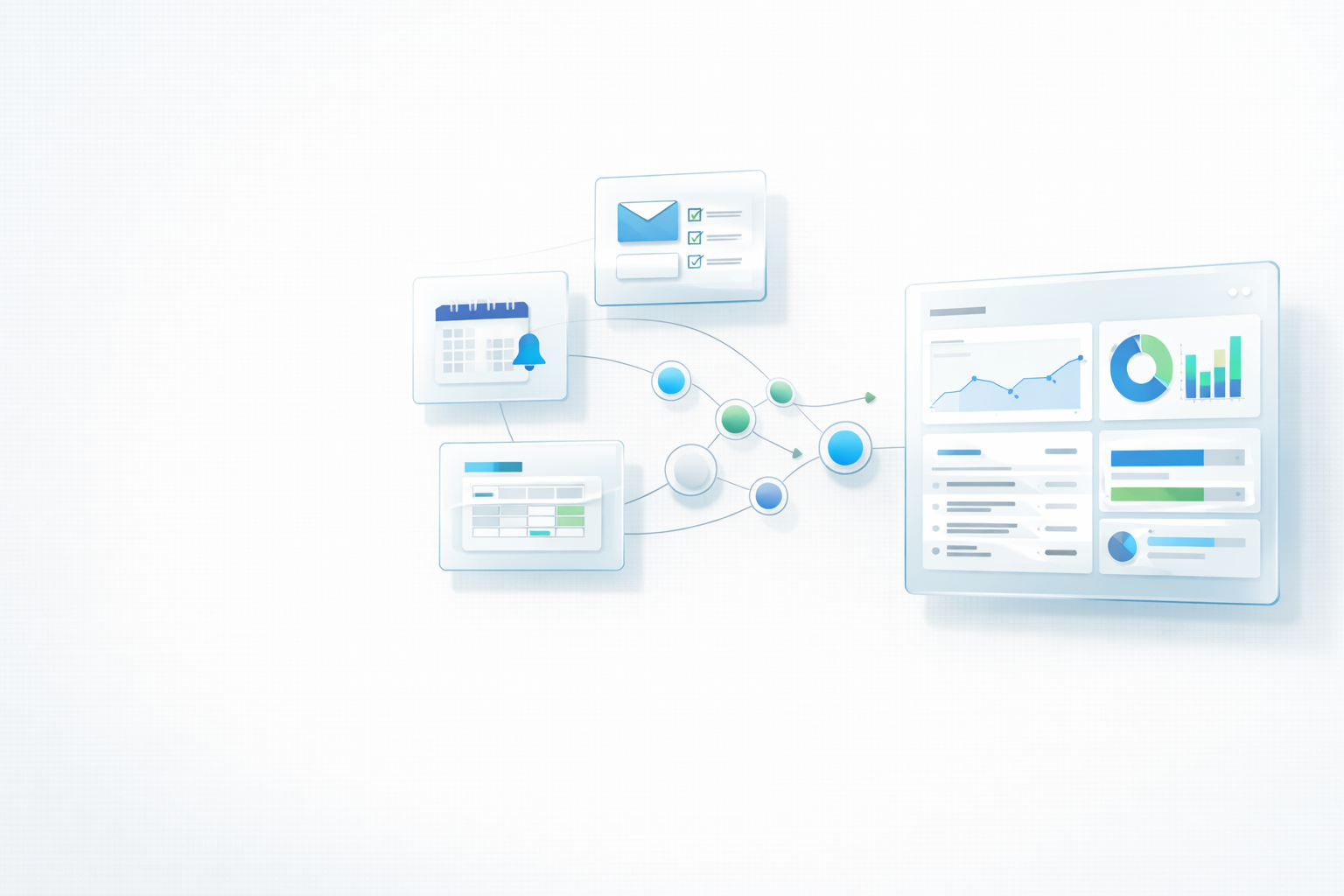
Quick check
Are your website enquiries reaching the right place?
If your website looks fine but leads are quiet, the issue may be hidden in your forms, email delivery, contact flow, messaging, or visibility.
The Repetitive Admin Tasks That Quietly Slow Down Small Businesses
A lot of small businesses do not feel held back by one major operational problem.
Instead, they are slowed down by many small repetitive tasks that build up across the day.
A reply needs sending. A lead needs logging. A booking needs confirming. A reminder needs chasing. Details need copying from one system into another. Someone has to check an inbox again. Someone has to follow up manually. Someone has to look for information that should have been easier to find.
None of these tasks seem dramatic on their own. That is why they are easy to accept as normal.
But over time, they create drag.
They take attention away from higher-value work. They make the business feel busier than it should. They increase the chance of delay, inconsistency, and missed opportunities. And because the workload is spread across lots of small moments, the real cost is often underestimated.
For many UK SMEs, this is where operational pressure starts. Not in the big visible projects, but in the repeated admin that keeps interrupting the day.
If you want help reducing that kind of manual friction, explore our AI Integration service or book a consultation.
The problem is often not workload alone, but workflow
When business owners feel stretched, the first assumption is often that there is simply too much to do.
Sometimes that is true. But often, the deeper issue is that the way work moves through the business is too manual.
The same types of actions happen again and again, but they still depend on people remembering every step themselves. That makes the day feel fragmented. Instead of focusing properly on customer work, delivery, sales, or growth, the team keeps switching into small admin tasks that break momentum.
This is one reason repetitive admin becomes so draining.
It is not only about time. It is also about attention.
A business can lose a surprising amount of productive energy just from constantly shifting between message handling, note-taking, chasing, checking, updating, and repeating the same operational actions.
That is why workflow matters as much as workload. When the process itself is too manual, the business becomes heavier to run than it needs to be.
Enquiry handling is one of the most common sources of drag
A lot of small businesses lose time in the early stages of communication.
An enquiry comes in through a website form, email, phone call, or social message. Someone has to see it, respond, collect the relevant details, decide what happens next, and make sure the follow-up is not forgotten.
When this process is manual, even basic lead handling can become inconsistent.
Sometimes the first reply is delayed. Sometimes the information is incomplete. Sometimes the lead is not logged properly. Sometimes a follow-up depends entirely on memory. Sometimes the business is busy, and the response path becomes harder to manage than it should be.
This is a common source of friction because it touches both sales and admin at once.
The business is not only doing the work. It is also constantly coordinating the work around the work.
That is where automation can create practical value. Not by removing the human side of the process, but by helping the routine parts happen more reliably. Confirmations, notifications, routing, reminders, and structured capture can all reduce avoidable effort.
If the website itself also needs to support enquiries more clearly, our Web Design service can help strengthen the front-end experience too.
Small admin tasks often create hidden delays
One reason repetitive admin is so costly is that it does not only consume time directly. It also slows down decisions.
When information is spread across inboxes, notes, spreadsheets, booking tools, and chat threads, people spend more time checking than acting. They pause to confirm what happened. They go looking for details. They repeat steps because the process is not connected enough.
That creates hidden delay.
A customer may not see the internal admin behind the scenes, but they feel the result. The reply is slower. The update comes later. The next step is less clear. The service feels less smooth than it should.
This is important because operational friction often becomes customer friction.
A business may believe it has an internal efficiency problem, but in reality the issue has already reached the customer experience.
Repetition increases the chance of inconsistency
Manual admin does not just slow the business down. It also makes outcomes less consistent.
Two similar enquiries may be handled differently depending on who sees them first. One customer receives a quick confirmation, while another waits longer. One follow-up is logged, another is forgotten. One booking gets the right reminder, another depends on someone remembering to send it.
This kind of inconsistency is common in growing SMEs.
The team is working hard, but the process is not stable enough. Important actions still rely too much on human memory, timing, and manual checking.
That is why automation is often most valuable in the repetitive middle layer of the business. It creates more consistency around routine actions, which helps the team deliver a smoother experience without needing to think about every small step each time.
Admin pressure often increases as the business grows
A process that feels manageable at one stage can become heavy surprisingly quickly.
When lead volume increases, services expand, or more systems are introduced, the small admin tasks multiply. What was once manageable becomes messy. What felt flexible starts creating delay. What felt personal starts becoming difficult to sustain consistently.
This is the point where many businesses realise they need better systems.
Growth should make the business more valuable, not harder to operate every day. But without stronger workflows, growth often adds pressure before it adds clarity.
That is why it helps to review operational processes before the friction becomes normalised. Many businesses adapt to inefficient routines for so long that they stop noticing how much energy those routines are consuming.
The best automation opportunities are usually simple
A lot of business owners assume automation means something large, complex, or expensive.
In practice, the most valuable improvements are often very practical.
A lead gets acknowledged instantly. An internal alert is sent automatically. Booking details are structured properly from the start. A follow-up reminder is triggered on time. Repeated admin steps are connected so that people are not copying the same information between systems.
These are not flashy changes, but they can create real relief.
That is because the goal is not to automate everything. It is to remove the unnecessary repetition that slows the business down and adds avoidable pressure.
A good review will usually identify a few areas where small workflow improvements create disproportionate value. That is often a much better starting point than trying to redesign everything at once.
Better systems create space for better work
This is the real benefit.
When repetitive admin is reduced, the team gains more room for work that actually needs human judgement. That may be sales conversations, customer support, service delivery, creative work, planning, or relationship-building.
The business becomes easier to operate, but it also becomes easier to improve.
That is why automation should not be seen only as a time-saving tool. It is also a focus tool. It helps protect attention from being constantly broken up by small operational tasks that do not need full manual handling every time.
And for many SMEs, that change has a direct effect on performance. Faster response times, fewer missed steps, cleaner processes, and more consistent customer journeys all tend to support stronger outcomes.
If your website is already bringing in leads, our SEO service can also help strengthen visibility while the operational side becomes more efficient behind the scenes.
Final thoughts
The repetitive admin tasks that slow down small businesses are often easy to overlook because each one feels small on its own.
But together, they create drag. They reduce focus, introduce inconsistency, and make the business harder to run than it needs to be.
For many SMEs, this is one of the clearest areas where better systems and automation can make a practical difference. Not by replacing people, but by reducing the manual repetition that consumes time and attention every day.
If your business feels busier than it should, it may be worth looking more closely at the small operational tasks sitting underneath that pressure.
If you want help identifying workflow improvements and automation opportunities, explore our AI Integration service, contact us, or book a consultation.
Keep reading
Related insights
More practical guidance to help improve visibility, conversion, enquiries, and digital systems.
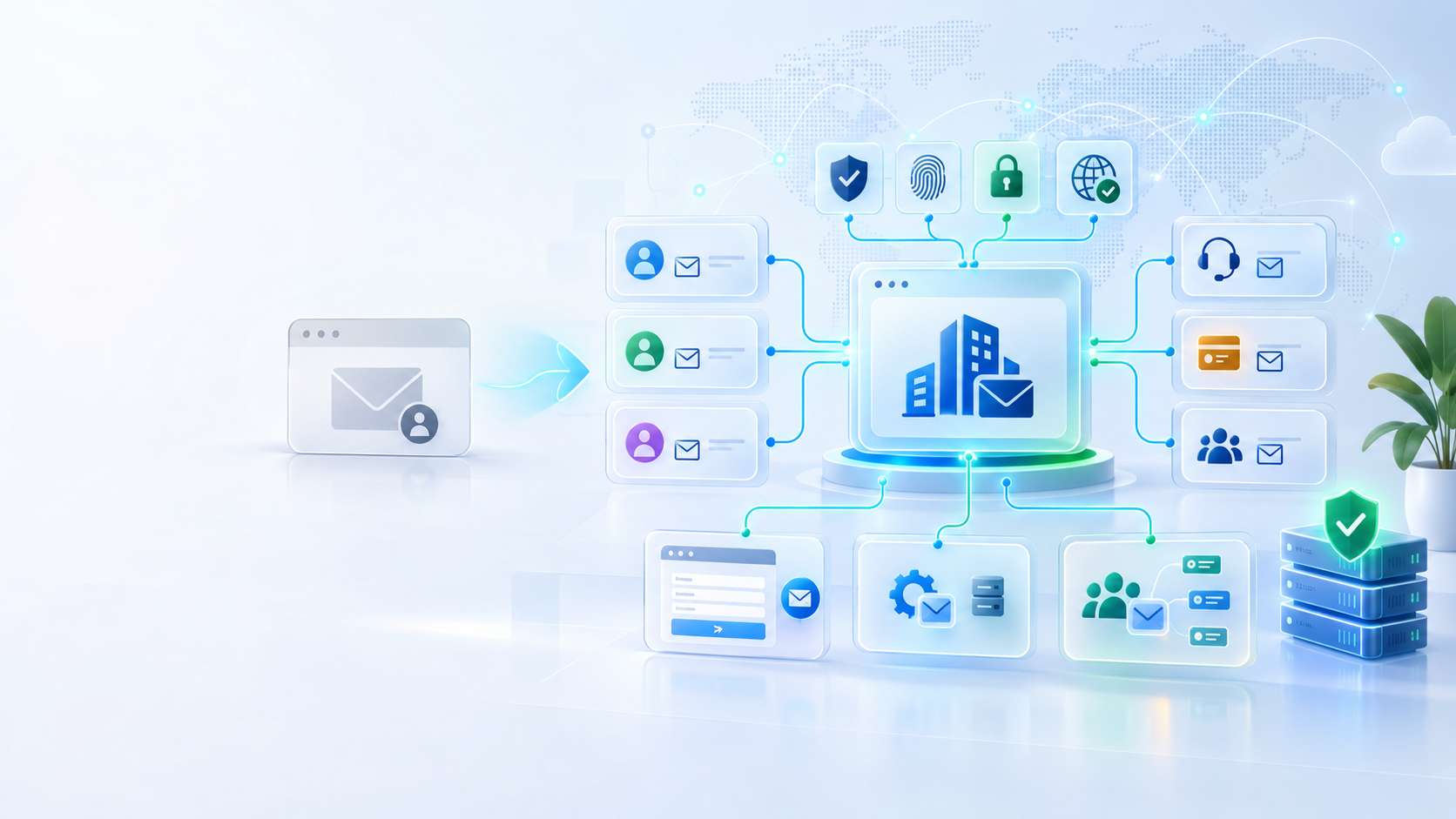
Why Growing Businesses Should Use Email on Their Own Domain
A Gmail or Outlook address may be enough when a business is just starting, but a custom-domain email creates stronger ownership, consistency, security, and room to grow. Here is why professional email infrastructure matters.
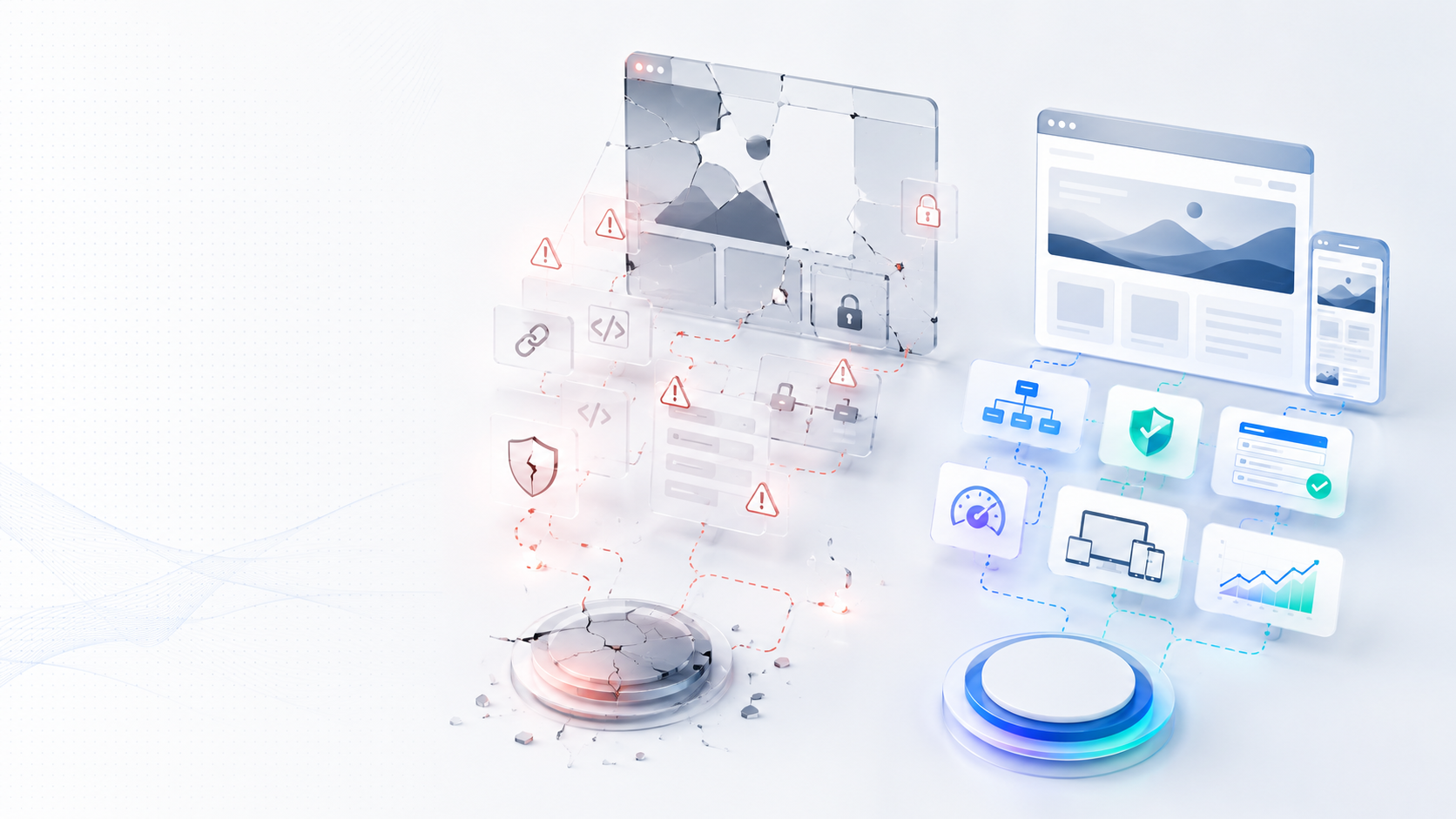
The Real Risk of Free Website Offers for Small Businesses
Free website offers may sound attractive, especially from new developers building a portfolio. But for serious businesses, a free website can create hidden costs, ownership problems, weak SEO, security risks, and expensive repairs later.
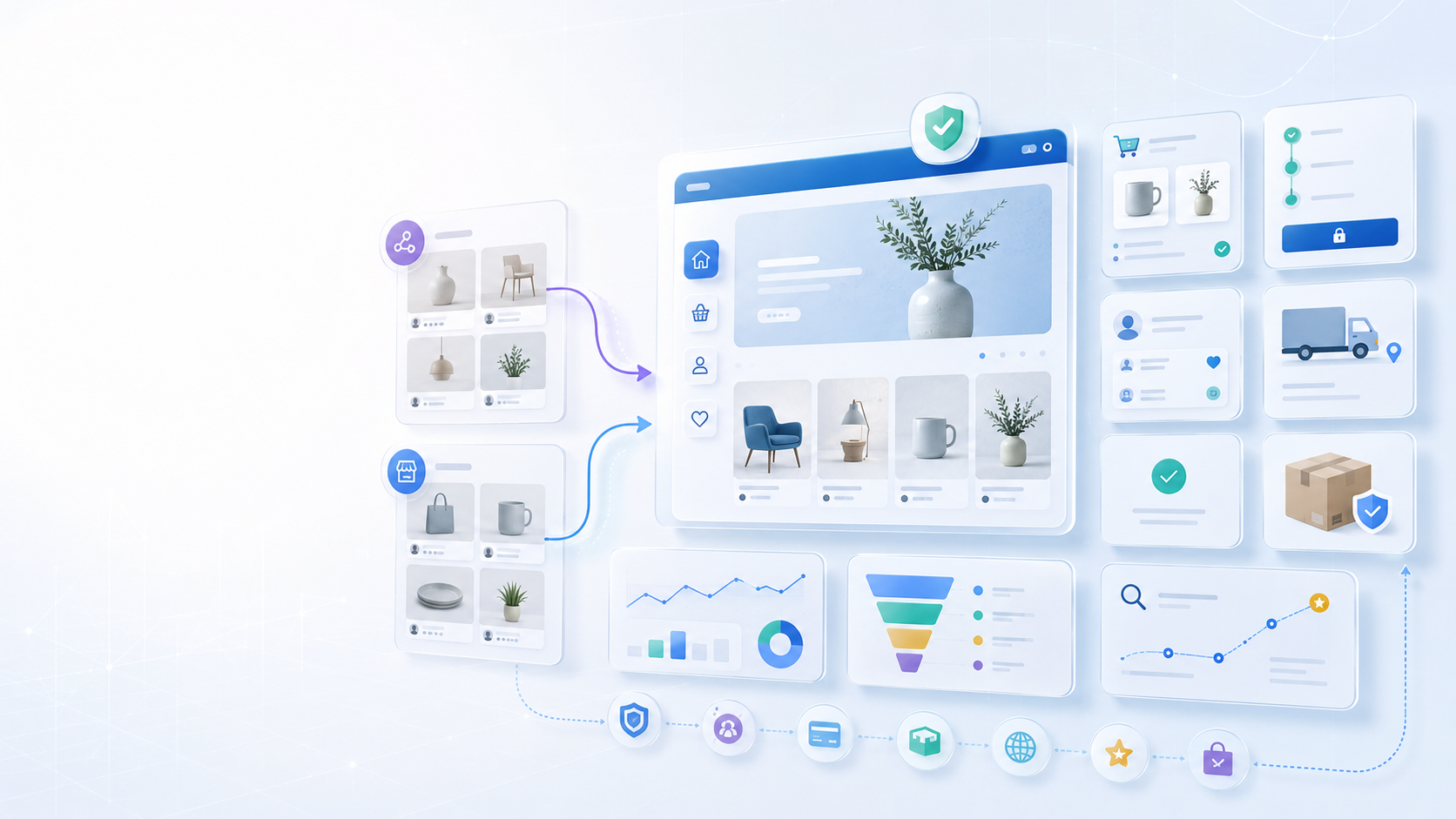
Why Product-Based Businesses Should Consider Their Own Online Shop
Social media and marketplaces can help product-based businesses get attention, but relying only on third-party platforms can limit control, trust, customer data, and long-term growth. Learn why a dedicated e-commerce website can create a stronger foundation.
Discussion
Comments
No comments yet
Be the first to share a useful thought, question, or takeaway from this article.